Westpac Youth Impact Challenge: Empowering 56,033 Young Australians to Create Positive Change.

Through a national partnership with Westpac, the Australian School of Entrepreneurship (ASE) delivered the Westpac Youth Impact Challenge, an Australia-wide initiative designed to equip young Australians with entrepreneurial, financial literacy and creative problem-solving skills.
Open to young Australians aged 7 to 21, the Challenge encouraged participants to identify real-world problems within their local or global communities and develop innovative business or social change initiatives to address them.
Combining a national competition, face-to-face workshops, online workshops, curriculum-aligned educator resources and ongoing mentoring, the partnership created meaningful opportunities for young Australians to recognise their potential as entrepreneurs, innovators and changemakers.
With more than 56,000 young Australians engaged across the country, the Challenge demonstrated the significant reach and impact that can be achieved when corporate Australia invests in the next generation.
Here's a snapshot of what we achieved together!
56,033 Young Australians Engaged Across Every Australian State and Territory.
One of the most significant achievements of the Westpac Youth Impact Challenge was its national reach.
Through our combined digital and face-to-face engagement model, the Challenge achieved:
56,033 young Australians engaged.
3,205 Challenge submissions.
8,446,740 minutes of learning recorded.
From metropolitan schools to regional communities and homeschooling groups, our delivery model enabled young Australians from diverse geographical and educational backgrounds to engage with entrepreneurial education.
Our national submission footprint included:
Queensland: 1,049 submissions.
New South Wales: 647 submissions.
South Australia: 489 submissions.
Victoria: 453 submissions.
Australian Capital Territory: 217 submissions.
Western Australia: 206 submissions.
Tasmania: 120 submissions.
Northern Territory: 24 submissions.
We're particularly proud that the Challenge received submissions from every Australian state and territory, demonstrating the national scalability of our approach to entrepreneurial education.
More Than 8.4 Million Minutes of Learning.
At the Australian School of Entrepreneurship, we believe that meaningful educational impact requires more than simply raising awareness.
Through the Westpac Youth Impact Challenge, young Australians accessed practical educational experiences designed to strengthen their financial literacy, entrepreneurial knowledge and transferable life skills.
The Challenge recorded:
1,952,880 minutes of online learning.
6,493,860 minutes of workshop learning.
Collectively, this represented more than 8.4 million minutes of learning.
By combining digital education, facilitator-led workshops and resources that educators could independently deliver, we created a scalable educational model capable of reaching young Australians well beyond the communities our facilitators could physically visit.
Ensuring Opportunity Has No Postcode.
At the Australian School of Entrepreneurship, we fundamentally believe that a young person's postcode should not determine the opportunities available to them.
We're particularly proud that 51.8% of our Youth Impact Workshops were delivered in regional, rural and remote communities, with the remaining 48.2% delivered in metropolitan Australia.
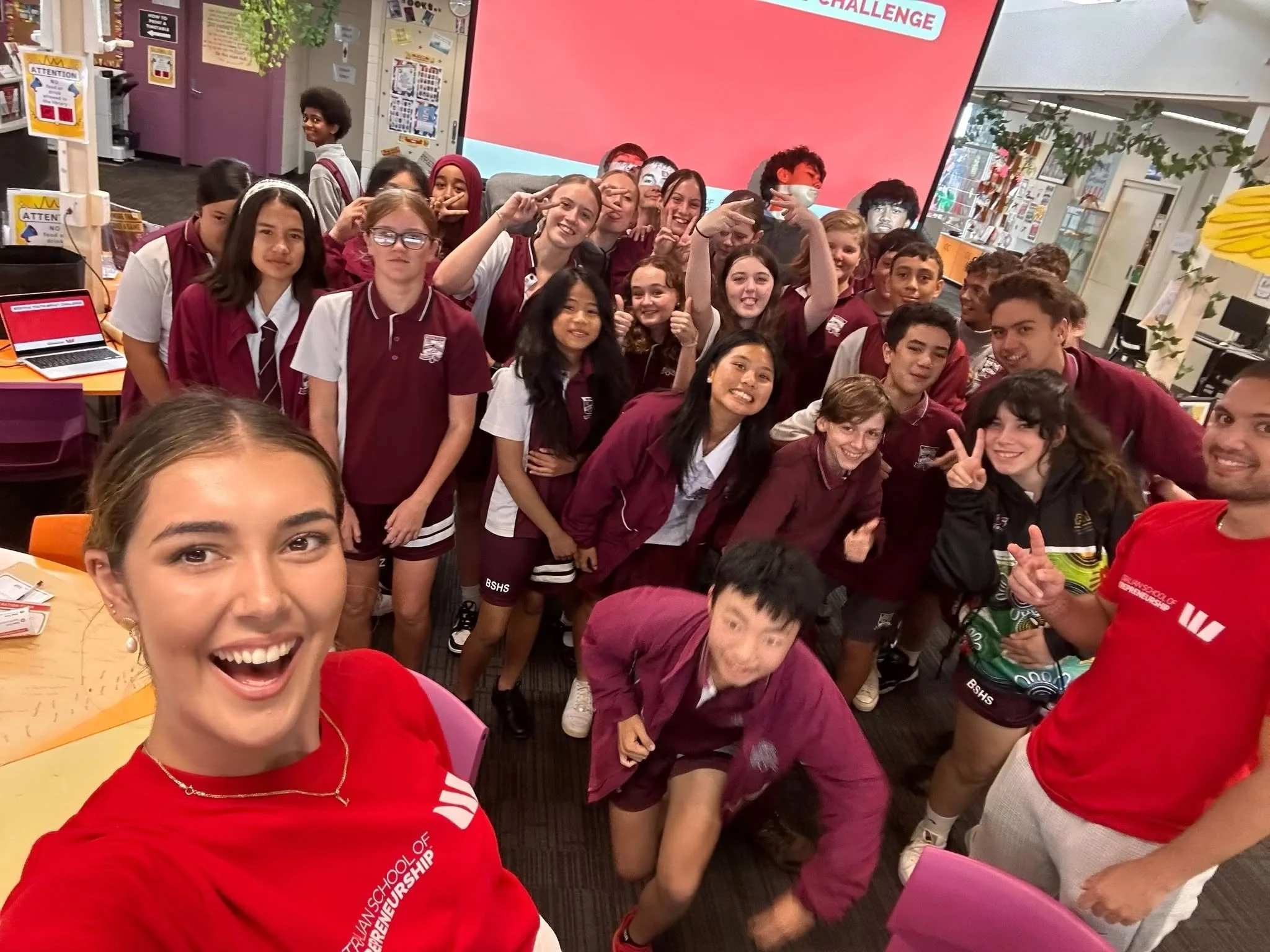
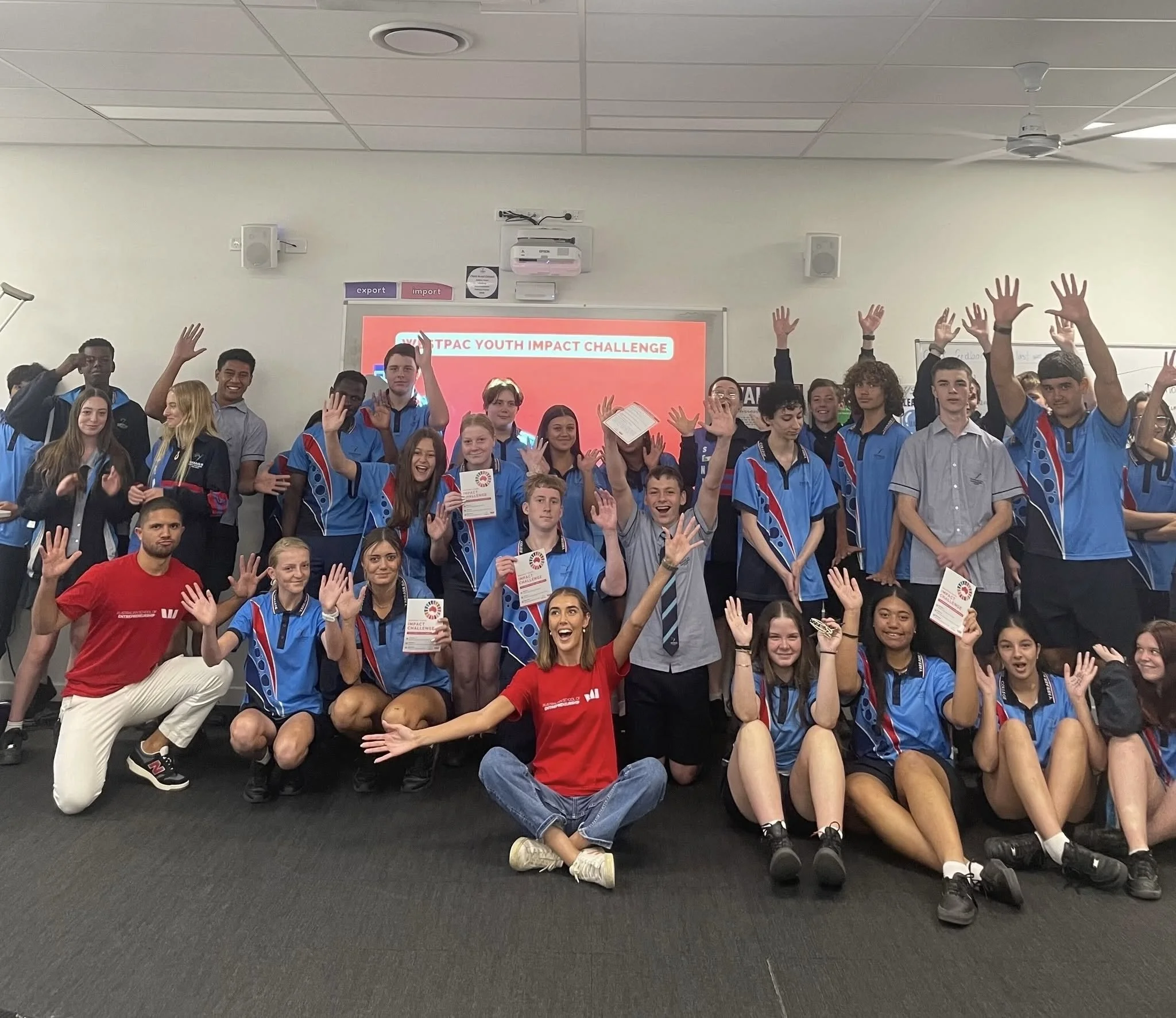
Our team delivered 27 workshops across six Australian states and territories, including 24 face-to-face workshops and three virtual workshops.
Our geographical workshop delivery footprint included:
Queensland: 37.05%.
South Australia: 29.63%.
New South Wales: 22.22%.
Western Australia: 3.70%.
Australian Capital Territory: 3.70%.
Tasmania: 3.70%.
Through these workshops, we directly engaged 1,896 participants, including 1,876 students across 26 schools.
Of our workshop delivery, 70.4% was across state schools and 29.6% across independent and private schools.
Our digital education platform and independently delivered Schools Kit further extended the accessibility of the Challenge, creating opportunities for young people who may otherwise have limited access to specialised entrepreneurial education.
Empowering the Next Generation of Female Entrepreneurs.
We're particularly proud that 66% of Challenge registrations were from young women and girls.
Our submission profile included:
2,115 female registrations (66%).
1,090 male registrations (34%).
1,699 state school submissions (53%).
The Challenge also engaged young Australians across different stages of their educational journeys:
35% primary school-aged participants.
55% secondary school-aged participants.
10% young adult participants.
By introducing entrepreneurship, financial literacy and leadership education from as young as seven years old, we wanted to demonstrate that business ownership and entrepreneurial thinking are opportunities available to everyone.
We believe that encouraging young women and girls to explore entrepreneurship from an early age is an important step towards greater female participation in business, leadership and economic decision-making.
100% of Surveyed Participants Felt More Confident with Their Business and Financial Literacy Skills.
While the significant reach of the Westpac Youth Impact Challenge was an incredible achievement, the educational outcomes were equally important.
Our post-program evaluations identified some incredibly encouraging results:
100% of surveyed students would recommend the Westpac Youth Impact Challenge to others.
100% felt more confident with their business and financial literacy skills.
93% said the Challenge was highly beneficial to their personal growth and that they learnt something new.
92.7% was the overall participant rating of the Challenge.
90% said the Challenge supported their learning.
85% would consider running a small business in the future.
That's more than four in every five surveyed participants who would consider business ownership as part of their future!
Developing Transferable Skills for the Future Workforce.
Our educational content was curriculum-aligned and designed to complement traditional classroom learning while developing practical skills relevant to the future workforce.
Our educational evaluations identified the following outcomes:
85% reported an enhanced sense of social responsibility.
75% reported developing their creative thinking skills.
75% reported developing their critical thinking skills.
60% reported developing their communication skills.
58% reported developing their problem-solving skills.
45% reported developing their financial literacy skills.
These are skills young Australians can carry into further education, employment, business ownership and their everyday lives.
Importantly, participants were encouraged to apply these skills to real-world challenges rather than simply learning about them in theory.
3,205 Submissions Addressing Real-World Challenges.
At the heart of the Westpac Youth Impact Challenge was a simple question: what problem would you like to solve?
Participants were encouraged to identify an issue within their local or global community and develop an innovative business or social change idea to address it.
Young Australians could participate individually or in teams of up to three, with each submission linked to one of the United Nations' 17 Sustainable Development Goals (SDGs).
The most frequently identified areas of interest included:
Good Health and Wellbeing: 16.5%.
Responsible Consumption and Production: 14%.
Zero Hunger: 9.8%.
Quality Education: 9.3%.
Sustainable Cities and Communities: 7.8%.
Life on Land: 7%.
Reduced Inequalities: 6.3%.
Climate Action: 6%.
Participants also developed ideas addressing poverty, clean water, gender equality, sustainable energy, accessibility and economic participation.
The submissions provided valuable insights into the issues young Australians care about and the future they want to help create.
Rather than telling young people what problems they should solve, we gave them the opportunity to identify the issues that mattered most to them and develop their own potential solutions.
Youth Impact HQ: Scaling Entrepreneurial Education Through Technology.
To extend the national reach of the Challenge, the Australian School of Entrepreneurship developed Youth Impact HQ, a dedicated online learning platform designed to help young Australians develop their business ideas and strengthen their financial literacy.
Youth Impact HQ featured:
Eight interactive learning levels.
15 educational video missions hosted by Australian actress Dakotah Love.
Case studies featuring Westpac alumni, Scholars and recipients.
Downloadable educational resources and worksheets.
Practical entrepreneurship and financial literacy activities.
The platform received an overall participant rating of 9.2 out of 10.
Through Youth Impact HQ, young Australians could access educational content independently, work through activities at their own pace and develop their Challenge submissions regardless of their geographical location.
This digital-first component complemented our face-to-face delivery and demonstrated the potential of technology to remove traditional geographical barriers to entrepreneurial education.
Supporting Educators to Deliver Entrepreneurial Education at Scale.
We recognise that teachers and educators play an incredibly important role in developing the next generation of entrepreneurs and changemakers.
Through the Westpac Youth Impact Challenge, we developed a dedicated Schools Kit to empower educators to independently deliver curriculum-aligned entrepreneurial education within their classrooms.
The Schools Kit included lesson plans, presentation slides and practical educational resources.
A further 18 schools and organisations delivered Youth Impact Workshops using these resources, including:
Seven in New South Wales.
Five in Queensland.
Three in Western Australia.
Two in Victoria.
One in South Australia.
These included four primary schools, three secondary schools and 11 P-12 schools.
By equipping educators with the resources to independently deliver our content, we extended the reach of the Challenge beyond our direct facilitation capacity and created additional opportunities for sustainable educational delivery.
Real Young People. Real Ideas. Real Impact.
Behind every Challenge submission was a young Australian with their own ambitions, lived experiences and ideas for making the world a little better.
Our Youth Impact Prize Winners demonstrated the incredible creativity, compassion and entrepreneurial potential of young Australians.
Creating Connections Across Generations - Robera Likisa, Founder of GoodMates, South Australia:
At just 10 years old, Robera developed GoodMates, a social enterprise concept designed to create meaningful intergenerational connections and address social isolation.
Having migrated from Ethiopia at the age of three, Robera understood firsthand the importance of maintaining connections with grandparents and extended family.
He transformed this experience into an entrepreneurial opportunity, developing a concept that connects children and older Australians through supervised visits, shared activities, mentoring and skill-sharing workshops.
As the Primary Age Category Winner, Robera received 12 months of mentoring with the Australian School of Entrepreneurship to support the development of his idea.
His ambition was to launch a digital platform and connect 200 people through GoodMates.
Robera's journey is a beautiful example of how young Australians can use their lived experiences to identify meaningful social challenges and develop practical solutions.
Making Communication More Accessible - Ashutosh Vaitha, Founder of Ashan Industries, Queensland:
At just 15 years old, Ashutosh was developing a technology business designed to make communication more accessible for neurodivergent children.
Through Ashan Industries, Ashutosh identified the need for more affordable and accessible communication support tools.
His solution, PEETA, was an app designed to help neurodivergent children communicate their needs, develop their communication skills and ultimately support their greater participation in society.
As the Secondary Age Category Winner, Ashutosh received ongoing mentoring from the Australian School of Entrepreneurship to support the development, marketing and promotion of his product.
Ashutosh shared:
“I am immensely grateful to ASE, Westpac and all organisers of the Westpac Youth Impact Challenge for this incredible opportunity. I’m excited to continue the mission of Ashan Industries and this Challenge and opportunity will help me do it!”
Using Technology to Tackle Waste - Jed Hoo, Founder of PURESORT, Queensland:
A user interface designer and computer science student at the University of Queensland, Jed developed PURESORT, a smart waste management solution designed to automate waste sorting and compact waste.
Having witnessed recyclable materials being incorrectly disposed of at his university campus, Jed recognised an opportunity to combine his technical knowledge with environmental sustainability.
Using computer vision technology, PURESORT was designed to improve waste sorting and divert recyclable materials from landfill.
As the Young Adult Age Category Winner, Jed received ongoing mentoring from the Australian School of Entrepreneurship to further develop his commercialisation, selling and financial literacy skills.
His journey demonstrates how young Australians can combine emerging technology with entrepreneurial thinking to address significant environmental challenges.
Recognising Australia's Young Changemakers.
Alongside our three national winners, the Challenge showcased an incredible range of innovative business and social change initiatives from finalists across Australia.
These included:
Girls Gymnastics in the Parks - Singitan Likisa, South Australia:
An initiative designed to provide accessible and affordable gymnastics opportunities for young girls, including those living with disability.
Students 4 Students - Summer Pumpa-Jones, New South Wales:
A digital magazine application designed to encourage literacy, creativity and student-led storytelling while reducing paper consumption.
Strive Connecting - Lena Nazibada, Queensland:
An initiative designed to address racial and cultural discrimination through workshops, advocacy, education and community engagement.
Blossom - Triet Ngyuen and Viet Ha, New South Wales:
An environmentally conscious bath bomb business designed to support clean water initiatives around the world.
We Are Not Alone - Rheanca Lincoln, Queensland:
An initiative focused on creating more inclusive communities for young people living with disability through accessible events, workshops and community connection.
South Australian Youth Forum - Amber Brock-Fabel, South Australia:
An initiative designed to bridge the gap between young people and decision-makers, advocating for issues including mental health, educational equity and community engagement.
These ideas reinforce our belief that young Australians are not simply the leaders of tomorrow. They have valuable ideas, perspectives and solutions to contribute to their communities right now.
Creating Impact That Extends Beyond the Challenge.
At the Australian School of Entrepreneurship, we believe that winning a competition should be the beginning of a young entrepreneur's journey, not the end.
Our national Youth Impact Prize Winners received a prize package designed to support their continued entrepreneurial development.
This included a Microsoft Surface device and kit, educational resources, recognition from Westpac and the Australian School of Entrepreneurship and 12 months of one-on-one business mentoring.
Through our broader alumni engagement model, participants could also access:
Connections to experienced business mentors.
Opportunities to connect with potential customers and investors.
Notifications of relevant funding and grant opportunities.
Networking and market stall opportunities.
More than 12 hours of online educational resources.
Connections to a national community of young entrepreneurs.
We wanted to ensure that young Australians had opportunities to continue developing their ideas well beyond the initial Challenge.
From Winning a Challenge to Generating More Than $27,000 in Business Revenue.
One of the most exciting examples of the longer-term impact of the Westpac Youth Impact Challenge is former Primary Age Category Winner Sebastian Onate-Henriquez.
Sebastian founded The Earth is My Place, a sustainable children's clothing brand that combines entrepreneurship with environmental impact.
For every shirt sold, Sebastian supports the planting of a tree through his partnership with Trees for a Future.
At the time of our alumni evaluation, Sebastian's business had achieved:
More than $27,000 in business revenue.
More than 817 trees planted.
Recognition in a published book highlighting his entrepreneurial achievements.
Sebastian shared:
“Thank you for confirming that I was on the right path and encouraging me to continue growing my business. Thank you for your constant support over the years and for supporting children like me in achieving their dreams and goals.”
Sebastian's journey is a wonderful demonstration of the potential longer-term impact of investing in young entrepreneurs, recognising their ideas and providing ongoing encouragement and support.
Creating Meaningful Partner Outcomes for Westpac.
The Westpac Youth Impact Challenge demonstrated how corporate partnerships can deliver meaningful educational and community outcomes while strengthening relationships with the next generation of Australians.
Our post-program evaluations identified encouraging outcomes for Westpac:
90% of surveyed students felt more positive towards Westpac as a result of the Challenge.
95% believed Westpac cared about inspiring young people.
70% believed Westpac cared about the future of their community.
55% believed Westpac had values they could relate to and respect.
The Challenge created opportunities for Westpac to meaningfully engage with young Australians through practical educational experiences focused on financial literacy, entrepreneurship and community impact.
Rather than relying exclusively on traditional marketing, the partnership enabled Westpac to demonstrate its commitment to young Australians through the delivery of tangible educational opportunities.
What Our Young People and Communities Had to Say.
Throughout the Westpac Youth Impact Challenge, we received wonderful feedback from participants, educators, parents and community leaders.
One workshop participant shared:
“My favourite part was planning a business and knowing that I can actually do it.”
Another participant shared:
“Being able to brainstorm solutions to problems we see and face every day was quite eye opening.”
Kimberley Diehm, Teacher and Alumni of Runcorn State High School, shared:
“It's so great to see my old high school getting on board with such interesting and authentic programs. It was programs like this that inspired me to become a teacher!”
Jimma Likisa, parent of Primary Age Category Winner Robera, shared:
“That was the most incredible night for our family. We are so grateful for all the good work that your organisation and the Challenge has done for our children and other Australians to unlock their potential in entrepreneurship. We are looking forward to working with you in the future to give the ideas of our children a life.”
For us, these reflections demonstrate that the impact of entrepreneurial education can extend well beyond individual participants, reaching families, schools and the broader community.
The Power of Corporate Australia Investing in Young People.
Through our partnership with Westpac, the Australian School of Entrepreneurship demonstrated the potential of combining corporate investment, educational expertise and innovative delivery models to create significant national impact.
We're incredibly proud of what we achieved alongside Westpac, our passionate facilitators, educators, community partners and the thousands of young Australians who participated in the Challenge.
At the Australian School of Entrepreneurship, we believe Australia's next generation of entrepreneurs, innovators and changemakers can come from absolutely anywhere.
With the right skills, resources, encouragement and opportunities, young Australians have the potential to create extraordinary change.